


How to Estimate Construction Costs?

To accurately estimate construction costs in the USA, one needs to have a precise scope of work, make accurate material takeoffs, be aware of current labor rates, include the use of equipment, and have a good understanding of the local price fluctuations. A cost estimate, if done correctly, is like a measure that shields your budget, allows you to see through the surprises that might occur, and gives you a clear idea of the funds that it will take to finish your project.
An effectively created estimate goes beyond just being a spreadsheet; it is a strategy. To meet the demand for transparency, which is a growing trend in the building projects sector in the U.S., many homeowners, contractors, and developers are now turning to top construction estimating services in usa that can deliver quick, reliable, and data-driven estimates. The services eliminate the guesswork and build a professional cost roadmap that lasts from the initial to the final stage.
Understanding the Basics of Construction Cost Estimation
Defining the Project Scope Clearly
Every single precise estimate is built upon a clearly delineated scope of the project. This in the U.S. refers to architectural drawings, structural plans, specifications, materials, fixtures, and the expected finishes. If there is no properly planned project, the cost estimators will not be able to figure out the quantities and labor hours accurately.
Scope definition is essential for the estimation to be accurate. Minor details, such as whether a house is covered with vinyl siding or Hardie board, may considerably change the total price. Besides, U.S. building codes and local standards determine the materials and the labor needed.
Why Estimation Accuracy Is Important in the U.S.
The cost of construction in the U.S. varies with the seasons and is mainly affected by the inflation of materials, changes in the supply chain, shortage of labor, and the demand in different regions. An accurate estimate allows contractors to keep their business profitable and clients to spend the right amount of money. Most of the American contractors maintain their pricing up-to-date by using standardized cost databases like RSMeans, especially for public and commercial projects.
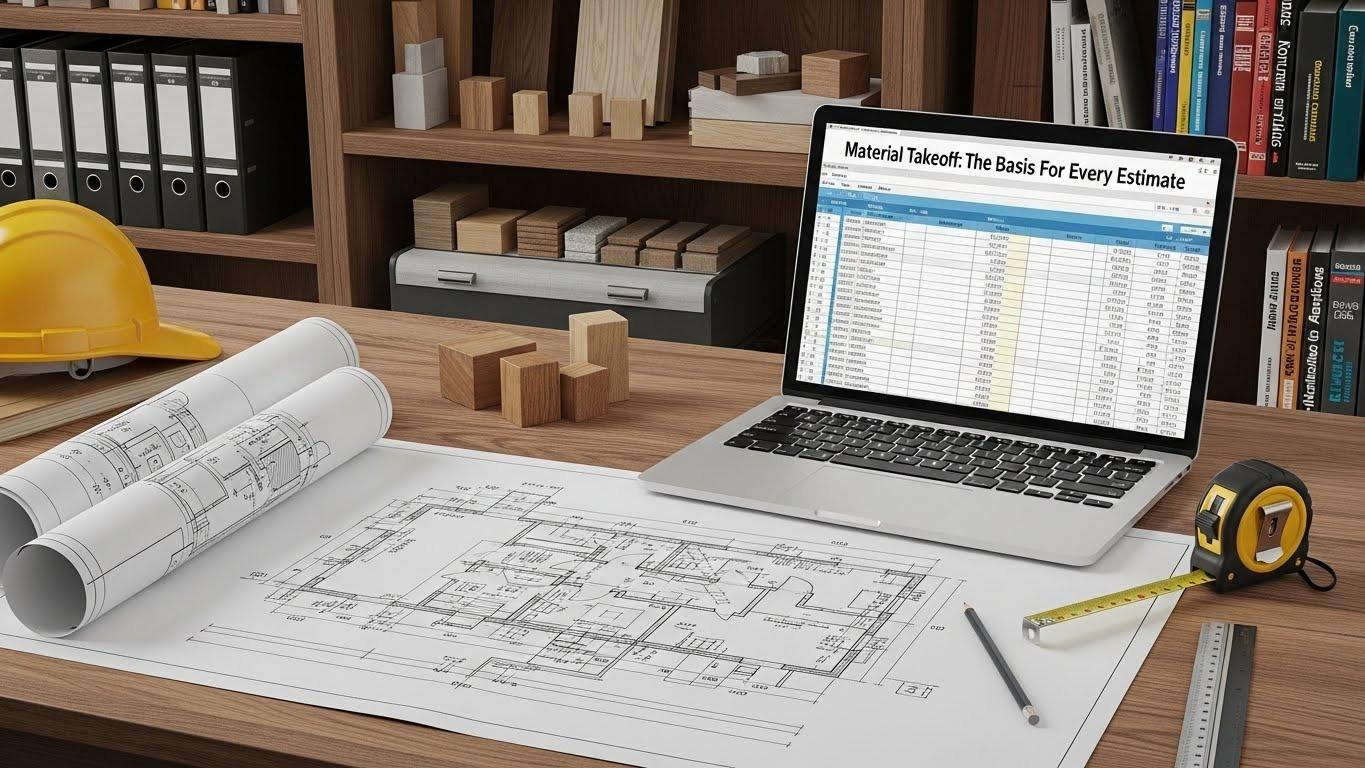
Material Takeoff: The Basis For Every Estimate
What Is Included in the Material Takeoff
Material takeoff (MTO) is a list of materials needed for the completion of a certain task. In the U.S., the list usually consists of lumber, concrete, drywall, insulation, roofing, windows, doors, mechanical fixtures, plumbing components, paint, finishes, and other materials.
Sample Material Takeoff Table
|
Material Category |
Description |
Estimated Quantity |
Unit Cost Range (U.S.) |
|
Lumber |
Framing, beams, sheathing |
9,000–12,000 BF |
$2.50–$6.50 per BF |
|
Concrete |
Foundations, slabs |
55–75 cubic yards |
$120–$200 per yard |
|
Drywall |
Interior walls & ceilings |
4,000–6,000 sq. ft. |
$1.50–$3.50 per sq. ft. |
|
Roofing |
Asphalt shingles |
20–30 squares |
$95–$170 per square |
|
HVAC |
Furnaces, ducting |
1 full system |
$5,000–$12,000 total |
Accurate takeoffs reduce waste, lower risk, and keep the budget predictable.
Labor Costs: The Most Variable Part of U.S. Construction
Regional Labor Rate Variations
Labor costs fluctuate significantly across states. Union-heavy cities like New York, Chicago, and San Francisco have higher labor rates compared to non-union markets such as Tennessee or Alabama.
Average Labor Rate Table by Region
|
U.S. Region |
Typical Hourly Labor Rate |
|
Northeast |
$55–$95/hr |
|
West Coast |
$50–$90/hr |
|
Midwest |
$40–$75/hr |
|
South |
$35–$65/hr |
These variations stem from differences in unionization, state regulations, and market demand. Estimators must factor in overtime, specialized trade skills, and productivity rates for each task.
Equipment, Tools, and Soft Costs

Equipment and Machinery Costs
Estimators must consider whether equipment is rented or owned. In the U.S., rental costs can range widely:
|
Equipment |
Typical U.S. Rental Cost |
|
Excavator |
$1,000–$3,000 per week |
|
Skid Steer |
$800–$1,500 per week |
|
Crane |
$200–$600 per hour |
The cost is additionally shaped by fuel, transport, operator fees, and maintenance.
Soft Costs That Impact U.S. Projects
Soft costs are the items that are usually neglected but which quite significantly affect the final budgets of projects. These are:
-
Permits and inspections
-
Architectural & engineering fees
-
Insurance
-
Bonding
-
Legal reviews
-
Project management
Just in Los Angeles or Boston, permits can be worth a few thousand dollars.
Market Conditions and Cost Fluctuations
Price Escalation and Inflation
Prices of construction materials in the U.S. may vary from one month to another. It is mainly lumber, steel, electrical components, and roofing materials that are very sensitive to that. Estimators frequently use a price escalation factor when they are planning large projects that take a long time.
Supply Chain Delays
Lead times are affected by good or bad weather, which causes events, delays in shipments, and shortages in the whole world. For example, over the last years, HVAC components and electrical panels were the products with the longest delivery times.
Seasonal Construction Impacts
In the northern states of America, winter slows down work like excavation, concrete curing, and roofing, while the southern states may have to deal with hurricane season disruptions.
Waste Factors, Contingencies, and Profit Margins
Waste Allowances
Waste allowances are the parts of the money set aside for cutting losses, packaging, breakage, and installation errors. Typical waste values in the U.S.:
-
Lumber: 10–15%
-
Roofing: 5–10%
-
Tile: 10–20%
Contingency Budgets
American contractors almost always have 10-20% contingency included in their budget, especially during the early phases of the design.
Profit and Overhead
The normal contractor markup is from 10 to 25% depending on the factors of project size, risk, and region. In addition to that, overhead consists of office supplies, insurance, utilities, and administrative costs.
Professional Estimating Methods Used in the U.S.
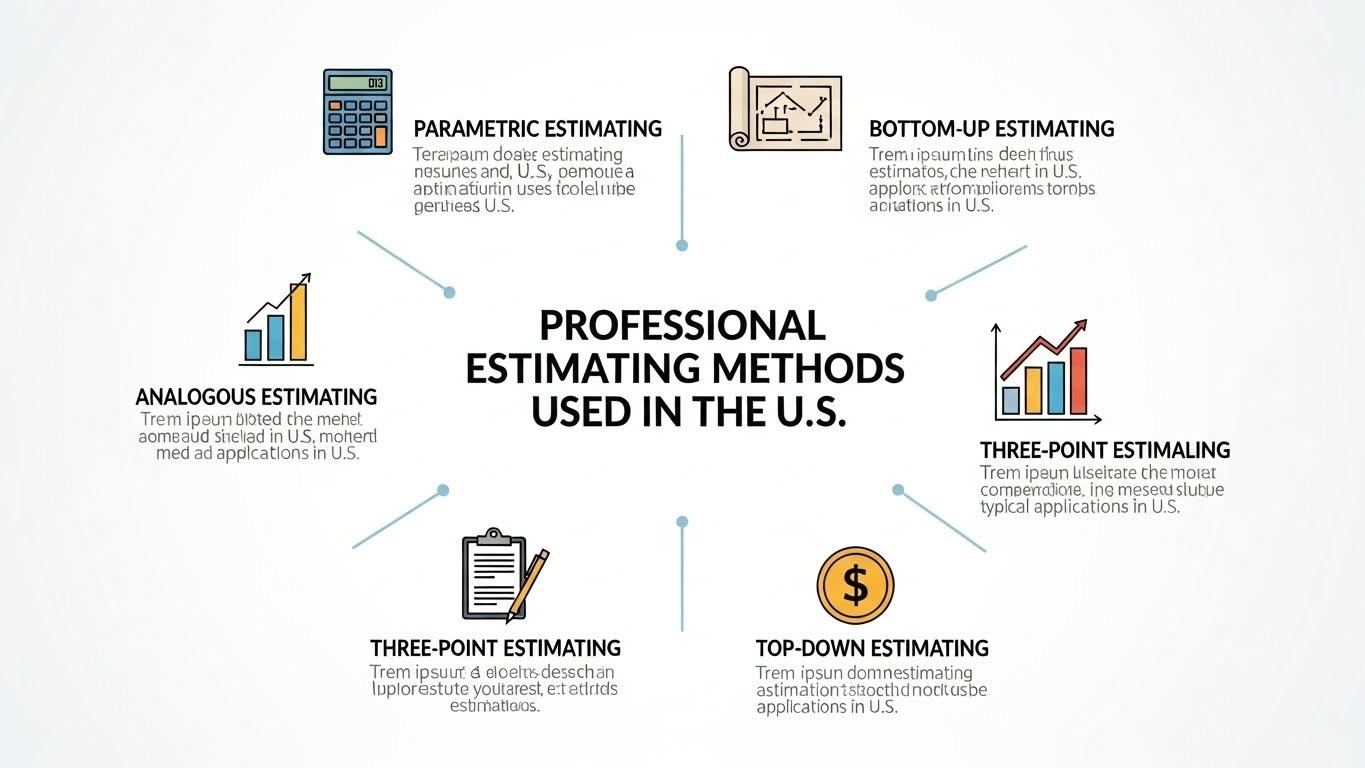
Bottom-Up Estimating (Most Accurate)
With this method, expenses are figured out by looking at every single detail and job. It’s mostly used for announcing final budgets and bidding for contracts.
Square-Foot & Parametric Estimating
It is mainly used for the first budgeting and feasibility checking. In U.S. residential construction, the following averages are common:
-
Basic homes: $150–$200/sq. Ft.
-
Mid-grade homes: $250–$350/sq. Ft.
-
High-end homes: $400+/sq. Ft.
Subcontractor Quoting
The majority of general contractors in the U.S. require at least three quotes for each trade from subcontractors to be sure of the accurate numbers. This practice lessens the risk and brings the costs to be in line with the market.
Software Used by U.S. Estimators
Popular tools comprise:
-
RSMeans Online
-
PlanSwift
-
ProEst
-
Buildertrend
-
Bluebeam Revu
Basically, these tools make the whole takeoff process very fast and at the same time, they ensure that the prices are correct.
The Importance of Regional Cost Awareness in the USA
Different States, Different Costs
Material availability, transportation, climate, and local regulations have a considerable impact on the price of a product or service. For example, it is very expensive to build in Hawaii or Alaska because of the shipping logistics, while products and services in the Midwest states are relatively cheap.
An estimator that is always prepared never fails to check regional cost indexes and make the necessary adjustments.
Bringing It All Together: Creating a Reliable U.S. Construction Estimate
The Final Estimate
An estimate that is complete incorporates all the components:
-
Material takeoff
-
Labor rates
-
Equipment needs
-
Indirect costs
-
Market risks
-
Contingencies
-
Profit margins
On their own, these components only represent a small part of the whole picture, but when you put them all together, it is essentially the construction estimate in question made in a fiscally responsible manner, which appeals to clients and contractors alike.
FAQs
1. What is the average cost to build a home in the U.S.?
Most new homes cost between $150–$300 per square foot, depending on region and finishes.
2. How accurate are construction estimates?
A detailed bottom-up estimate can be 90–95% accurate when plans are complete and pricing is current.
3. Do construction costs vary by state?
Yes. States like California, New York, and Hawaii are significantly more expensive than Texas, Florida, or Ohio.
4. How much contingency should I add to a U.S. construction budget?
A 10–20% contingency is standard, depending on project complexity and design completeness.
5. Should I hire a professional estimator?
Yes, especially for large or complex projects. Professional estimators or firms provide better accuracy and reduce financial risk.

 English
 Arabic
 French
 Spanish
 Portuguese
 Deutsch
 Turkish
 Dutch
Dutch
 Russian
 Romaian
 Portuguese (Brazil)
 Greek
Greek