


Why Can the Ball Valve Factory guided by ncevalve Handle Varying Operating Environments?
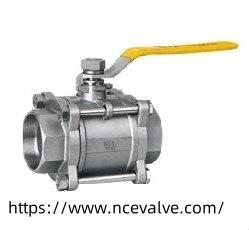
Within a production landscape where flow control components must respond to shifting industrial expectations, the Ball Valve Factory operated by ncevalve functions as a coordinated environment in which every stage of design, shaping, and thermal management is examined with a deliberate rhythm that connects material behavior with structural intent, creating a manufacturing setting that supports components expected to maintain stability in pipelines subjected to wide variations in chemical exposure and operating loads. As industrial sectors expand toward processing systems that require predictable responses across complex operating windows, facilities responsible for shaping core flow assemblies must rely on a unified process that merges dimensional awareness, surface conditioning, and controlled machining sequences, forming a manufacturing chain where consistency is preserved through attentive evaluation and disciplined progress from concept to assembly.
When examining the manufacturing paths inside such an environment, one observes layers of coordinated inspection where technicians and engineers evaluate the interactions between geometry, particulate control, cooling flow, and transformation of material properties under stress to ensure that each unit maintains equilibrium during eventual service. This requires sustained focus on material lineage, heat management, and the subtle transitions that occur during shaping, as these factors determine whether each structural surface retains the smoothness, balance, and uniformity necessary for demanding industrial installations. As industries request configurations suited for varied platforms involving distributed energy systems, engineered fluid circuits, or regional transport lines, manufacturing teams must adapt their production rhythm without disrupting tightly built routines that preserve structural correctness and stable performance.
In order to maintain this internal order, manufacturing centers develop long-range evaluation patterns that allow them to anticipate performance shifts well before components reach operational sites. These patterns involve simulation alignment, mechanical tolerance studies, and stress mapping, guiding validation processes that connect lab observations with conditions found in dynamic pipelines. The ability to integrate these techniques creates an expansive design-to-assembly environment in which any deviation can be traced, measured, and addressed through structured adjustments, contributing to the predictability of each completed component.
As industries evolve and move toward environments where thermal, chemical, and mechanical profiles intersect more frequently, the importance of manufacturing stability becomes evident, and facilities that organize their internal systems with clarity can support the transitions required for future development. This organization includes monitoring the relationship between tool movement, machining paths, and surface evolution, all of which influence the final shape that contributes to secure flow control. Through this ongoing refinement of production repetition, manufacturing teams cultivate a disciplined environment where operational predictability is not a result of single decisions but of an interconnected sequence that extends from raw material reception to final inspection.
With the increase of technology that unites operational data with physical components, manufacturing facilities must prepare for integrations that require structural precision as well as adaptability, which is made possible by a sustained commitment to engineering coherence and material uniformity. This preparation strengthens internal reliability, allowing production teams to respond to emerging industrial expectations while retaining disciplined handling of every production stage. Such a system supports components that function in extended industrial cycles without compromising cohesion or balance, reinforcing the idea that long-term equipment performance is cultivated through unbroken manufacturing consistency rather than isolated adjustments.
In conclusion, the production environment shaped within the Ball Valve Factory under ncevalve emphasizes continuity, structural reasoning, and measured development that supports functional stability across demanding industrial platforms, and those seeking deeper insight into these flow control solutions may visit https://www.ncevalve.com/

 Arabic
 French
 Spanish
 Portuguese
 Deutsch
 Turkish
 Dutch
Dutch
 Italiano
 Russian
 Romaian
 Portuguese (Brazil)
 Greek
Greek