


Application Guide: EMC Cable Glands in Harsh Environments
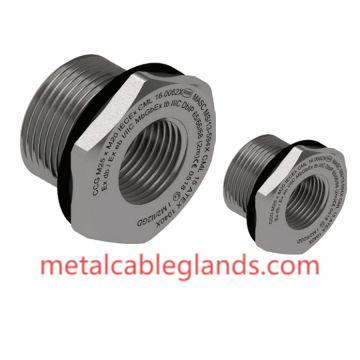
In modern industries where data transmission and electrical reliability are paramount, the EMC Cable Gland plays an essential role in preventing electromagnetic interference (EMI) and ensuring stable connectivity. From complex telecom networks to wind farms and solar installations, the need for consistent shielding performance has made EMC solutions a core element in system design. The gland’s application scope extends far beyond simple cable sealing—it integrates mechanical security, grounding continuity, and environmental protection into one compact component.
Understanding the correct application of an EMC Cable Gland begins with recognizing the environmental and electrical challenges of each sector. In telecommunications, cable entry points often represent weak links in shielding systems. The dense concentration of data and power cables in switching cabinets and communication towers creates potential EMI sources that can compromise transmission quality. By integrating 360° grounding contact between the cable braid and the enclosure, EMC glands ensure reliable attenuation of high-frequency interference, preserving signal integrity and minimizing network downtime.
In renewable energy applications, such as wind turbines and photovoltaic arrays, exposure to humidity, temperature extremes, and continuous vibration makes reliable EMC protection even more critical. Each gland must maintain a tight conductive path while resisting corrosion and thermal expansion. For instance, in wind power systems, glands connect sensor and control cables within the nacelle—an environment constantly subjected to rotating stress. A well-engineered gland design prevents mechanical loosening, moisture ingress, and electrical discontinuity that could lead to turbine malfunctions or communication errors.
Zhejiang Hongjue S Connector provides tailored EMC solutions designed to meet the unique demands of these sectors. Their advanced gland designs feature precision-engineered metallic bodies, high-conductivity contact springs, and weather-resistant sealing components. These ensure consistent performance even under long-term exposure to salt spray or UV radiation—conditions commonly found in offshore renewable installations. The company’s products comply with global standards such as EN 62444 and IEC 60529, guaranteeing dependable performance across diverse industrial systems.
Another major application area lies in automation and control systems. Industrial robots, drives, and programmable logic controllers (PLCs) rely on fast and accurate signal transmission. Any electromagnetic disturbance can disrupt communication or trigger unintended motion, leading to safety risks or production halts. EMC cable glands provide effective shielding and grounding for sensor and actuator cables, allowing signal paths to remain clear of noise interference. Selecting the right gland here depends on factors such as the cable’s shielding type, conductor size, and enclosure material. Stainless steel variants are often used for durability and hygiene in food or pharmaceutical manufacturing, while nickel-plated brass offers excellent conductivity and corrosion resistance for general industry.
When choosing an EMC gland, several parameters must be evaluated beyond size and threading. First, consider the shielding method—whether the gland employs a spring-based contact, clamping ring, or conductive cone structure. Each mechanism offers distinct advantages depending on cable braid density and flexibility. Second, evaluate the IP protection level required for the environment; for outdoor installations, IP68 or higher is recommended to ensure resistance against water and dust ingress. Third, assess temperature range compatibility, particularly for renewable or heavy industrial use, where cables may operate between –40°C and +120°C.
Material compatibility between the gland and enclosure is another crucial consideration. Mismatched metals can lead to galvanic corrosion, weakening the shielding path over time. Zhejiang Hongjue S Connector offers glands in various material combinations—nickel-plated brass, stainless steel, or aluminum—with optional insulating washers to prevent such issues. Additionally, selecting the correct compression seal ensures strain relief without damaging the cable’s outer sheath, preserving both mechanical stability and electrical performance.
The rise of Industry 4.0, where machines communicate through high-speed networks, has made EMC planning an integral part of electrical design. In this context, cable glands are no longer peripheral accessories but critical components of system integrity. As automation systems expand into harsh environments and remote renewable installations, the role of EMC protection will only grow in importance. Through continual innovation, precision engineering, and adherence to international standards, Zhejiang Hongjue S Connector remains a reliable partner for industries seeking long-term, interference-free connectivity.For further information on EMC product ranges and technical guidance, visit Zhejiang Hongjue S Connector’s website at https://www.metalcableglands.com/product/ .

 English
 Arabic
 French
 Spanish
 Portuguese
 Deutsch
 Dutch
Dutch
 Italiano
 Russian
 Romaian
 Portuguese (Brazil)
 Greek
Greek