


Press Fit Tool: The Essential Device Behind Precision Assembly
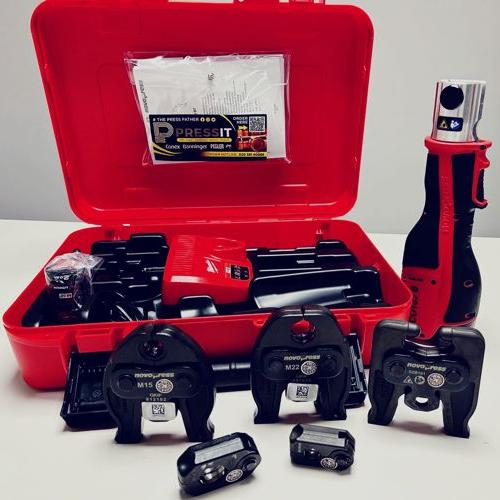
In the world of modern manufacturing, accuracy isn’t a luxury — it’s the foundation of every successful product. Whether it’s assembling automotive parts, securing electronic components, or creating seamless mechanical joints, one tool plays an understated yet powerful role: the press fit tool. Designed to join parts through controlled force instead of welding or adhesives, this tool ensures a tight, reliable connection that lasts.
The concept may seem simple, but the engineering behind it is remarkable. Let’s explore how press fit tools have become a backbone of precision assembly across countless industries.
What Is a Press Fit Tool?
A press fit tool is a specialized device used to push one component into another with exact pressure, creating a friction-based connection. The fit is so precise that the two parts lock together without screws, glue, or heat.
How Press Fit Tools Work
Press fitting relies on a simple mechanical principle — one component is slightly larger than the opening it enters. The press fit tool applies steady, controlled force to push the parts together without damaging them.
Key elements include:
-
Controlled pressure to avoid cracks or misalignment
-
Perfect tolerance matching between parts
-
Smooth motion to maintain precision
This method ensures that the final assembly performs reliably, even under high stress or rotational loads.
Types of Press Fit Tools
1. Manual Press Fit Tools
These handheld or bench-mounted tools are ideal for small-scale or delicate assembly work. They offer:
-
Better control for technicians
-
Suitable force for small pins or connectors
-
Low-cost operation
Used widely in electronics, jewelry, and small mechanical workshops.
2. Hydraulic Press Fit Tools
Hydraulic tools use fluid pressure to generate significant force. They are perfect for:
-
Heavy-duty assemblies
-
Larger bearings and shafts
-
Automotive and industrial components
Their smooth, powerful movement ensures consistent results every time.
3. Pneumatic Press Fit Tools
Air-powered systems provide quick, repeatable motion, making them ideal for fast-paced production lines.
Benefits include:
-
High speed
-
Minimal operator effort
-
Integration with automated systems
These are common in factories using repetitive assembly cycles.
4. Electric or Servo Press Fit Tools
The most advanced type, servo-driven press tools offer:
-
Real-time force monitoring
-
Programmable settings
-
High precision for sensitive components
These are widely used in high-tech industries such as aerospace, medical device manufacturing, and precision electronics.
Where Press Fit Tools Are Used
✔ Automotive Manufacturing
Everything from engine components to suspension parts involves press fitting. It ensures durability under extreme conditions.
✔ Electronics
Circuit connectors, sockets, and micro-components require the gentle yet exact force that press fit tools deliver.
✔ Machinery Production
Gears, sprockets, and rotating parts depend on a secure press fit for long-term stability.
✔ Metalworking Shops
Repair technicians rely on press fit tools for installing bearings or removing worn-out parts.
✔ Renewable Energy Equipment
Wind turbines and solar tracking systems often use press-fit joints for high-strength reliability.
Advantages of Using Press Fit Tools
1. High Precision
Because the tool applies controlled pressure, parts fit together with exact alignment.
2. No Need for Adhesives or Heat
This makes the process cleaner, safer, and more environmentally friendly.
3. Strong and Reliable Joints
Press-fit connections resist vibration, torque, and long-term wear.
4. Cost-Effective
Less hardware, fewer chemicals, and quicker assembly mean lower production costs.
5. Ideal for Automation
Modern factories integrate press fit systems into robotic lines to enhance speed and consistency.
How to Choose the Right Press Fit Tool
When selecting a press fit device, consider:
• The Size of Your Components
Larger parts need hydraulic or pneumatic tools; smaller ones may only need manual presses.
• Required Force Level
Check the force rating to ensure the tool matches your assembly needs.
• Frequency of Use
For high-volume production, automated or servo tools are the best investment.
• Precision Requirements
Sensitive or high-value components require tools with force monitoring and repeatable accuracy.
• Workspace Environment
Choose a tool that fits your setup—bench-mounted, portable, or integrated with machines.
Final Thoughts
The press fit tool may look simple, but its impact across industries is immense. By providing strong, precise, and reliable connections, it supports the production of everything from tiny electronic parts to massive industrial machinery. As companies push toward smarter, more efficient manufacturing, press fit technology continues evolving — offering even greater accuracy and predictive performance.

 English
 Arabic
 French
 Spanish
 Portuguese
 Deutsch
 Turkish
 Dutch
Dutch
 Italiano
 Russian
 Romaian
 Portuguese (Brazil)