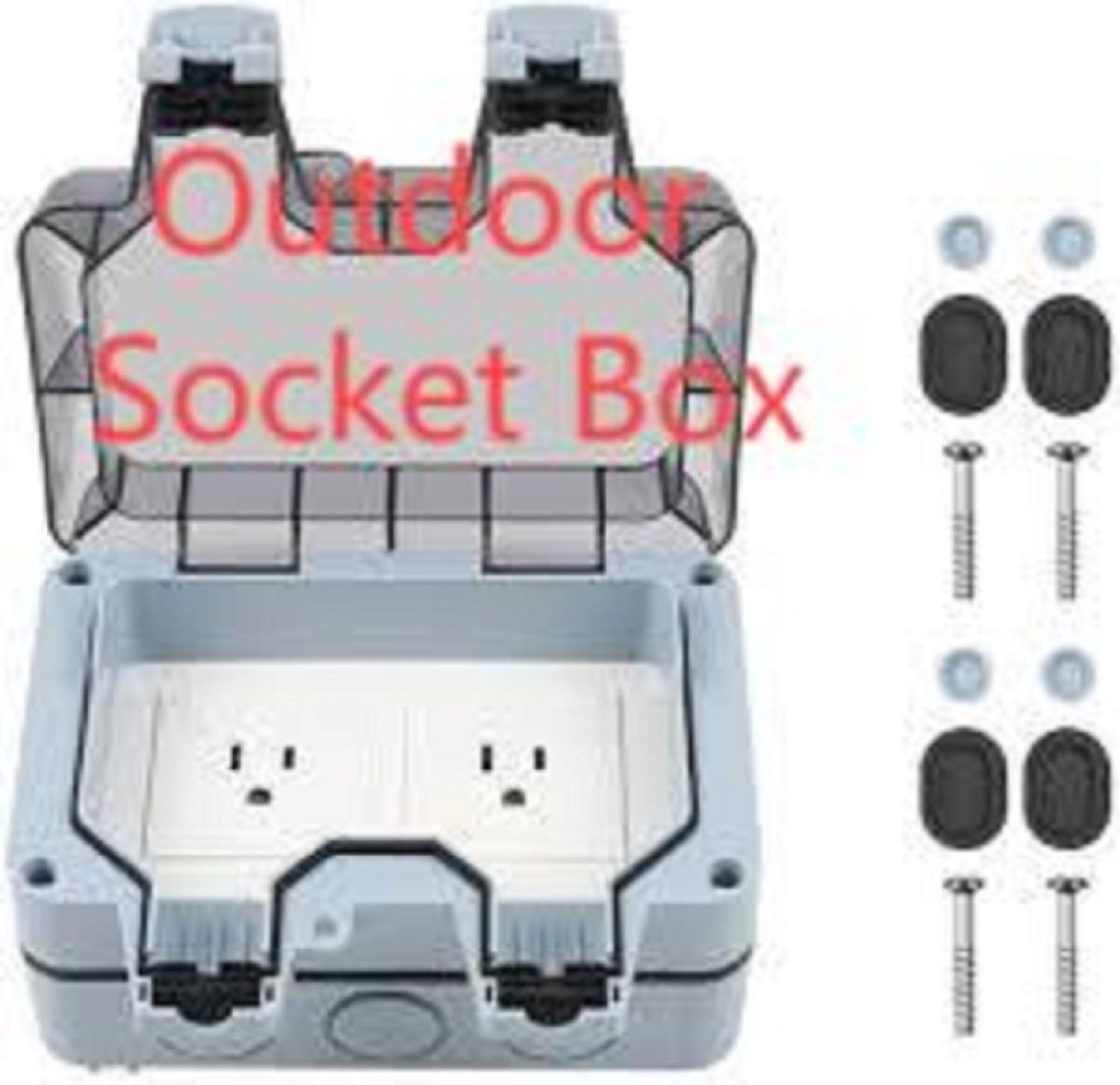
In many outdoor and industrial installations, a reliable Socket Box shields electrical connections from moisture and physical damage, and choosing the correct Socket Box during design prevents costly downtime and improves long-term safety. Proper early specification streamlines procurement, ensures the right ingress protection, and gives installers clear guidelines for mounting, wiring, and maintenance.
Understanding functional requirements for enclosures
Begin by mapping actual use cases: expected loads, environmental exposure, frequency of access, and whether the location will face washdown, salt spray, or direct sunlight. These factors dictate IP rating, material choice, and whether additional features (like locking covers or integrated surge modules) are necessary. A needs-driven approach prevents over- or under-specifying hardware.
Materials, seals, and mechanical resilience
Housings are commonly fabricated from UV-stable polymers, die-cast aluminum, or stainless steel depending on corrosion and impact risks. Gasket geometry and compression method determine how long a seal maintains performance. Reinforced hinges, captive fasteners, and tamper-resistant screws improve service life in high-traffic locations while protecting internal contacts from contaminants and vibration-induced wear.
Safety standards and compliance essentials
Verify relevant standards—regional electrical codes and international classifications—for voltage, current, and ingress protection. Look for products with tested temperature-rise data, dielectric strength reports, and mechanical endurance certifications. Key safety features include clear earth/phase markings, keyed inserts to avoid mismating, and optional RCD or fused modules where protection against leakage or overload is required.
Nante product families and modular design advantages
Modular systems simplify customization: interchangeable inserts, spare-module availability, and standardized mounting footprints reduce downtime during service. Designers benefit from families that offer mixed-function panels (power, signal, data) so a single location can meet multiple needs. Modular approaches also reduce inventory complexity—keeping a few inserts on-hand can support rapid field replacements without changing the full enclosure.
Installation best practices to maximize uptime
Correct cable gland selection, strain relief, and terminal torque are as important as the enclosure specification. Use suitably sized glands to avoid conductor abrasion and ensure seals compress evenly. Route cables to minimize heat buildup and prevent sharp bends near entry points. Labeling and consistent wiring diagrams make future service and inspections faster and less error-prone.
Maintenance routines and lifecycle planning
Scheduled inspections should include gasket condition checks, fastener torque verification, and visual contact inspections for discoloration or corrosion. Replace consumables—gaskets, gland seals, and captive screws—before failures occur. Maintain a small parts kit with common inserts and gaskets to accelerate repairs. Documenting installation details (mounting height, cable types, and torque values) streamlines troubleshooting and preserves institutional knowledge.
Smart integrations and accessory options
Today’s enclosures often accept surge protection devices, remote sensors for moisture or temperature, and data ports for communications. Integrating monitoring capabilities supports predictive maintenance by flagging abnormal temperatures or ingress events. Choosing enclosures that accept accessory modules helps future-proof sites and lets facility managers add functionality without extensive field modifications.
Selecting the right product family for your environment
Balance cost against expected lifetime and maintenance capability. For coastal or chemical-exposed sites, prioritize corrosion-resistant alloys and replaceable gaskets. For temporary or mobile use, choose impact-resistant polymers and lightweight designs. For fixed, high-load applications, verify thermal management and choose larger internal volumes to prevent heat concentration around power modules.
Final recommendations and resources
A thoughtfully selected, well-installed enclosure reduces failures, improves safety, and lowers total lifecycle cost. Prioritize tested products with modular options and clear documentation to simplify procurement and maintenance. For detailed specifications, configurators, and product families tailored to specific environments, visit www.nante.com/product/




 English
 Arabic
 French
 Portuguese
 Deutsch
 Turkish
 Dutch
Dutch
 Italiano
 Russian
 Romaian
 Portuguese (Brazil)
 Greek
Greek