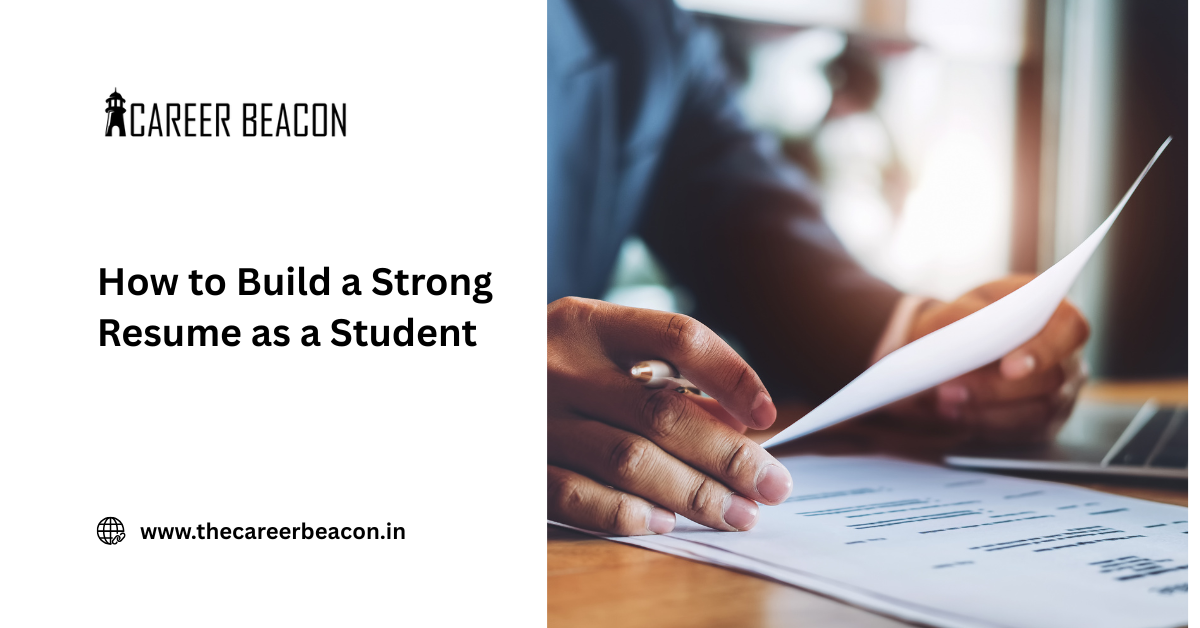
How to Build a Strong Resume as a Student
As a student, it can feel challenging to compose a quality resume when you do not have much work experience. However, the reality is that employers and colleges do not expect you to have long professional careers. Employers and colleges understand that they are going to see students experience, skills, academic accomplishments, projects, and potential. An well organized student resume can set you apart whether you’re applying for part-time jobs, internships, scholarships, or your first full-time job establishment!
In this article, you will learn how to write a quality student resume, step-by-step, with convenient and simple ways to demonstrate your strengths.
1. Start With a Clear Resume Header
Your resume header should include essential contact details so recruiters can reach you easily. Keep it clean and professional.
Include:
-
Full name
-
Phone number
-
Professional email ID
-
City & state
-
LinkedIn or portfolio link (if available)
Avoid using casual email IDs—create a new one if required.
2. Develop a Compelling Resume Objective
As a student, your objective is synonymous with a job objective. In two or three sentences, describe your skills, character, and aspirations.
For instance, an enthusiastic 12th student with professional-level people and collaboration skills desires an internship in digital marketing to gain experience and contribute to developing innovative campaigns.
This shows intent, skill, and clarity – the perfect combination employers seek.
3. Emphasize Your Education
Education becomes one of the most crucial aspects of a resume because students have little experience.
Add:
- Name of the school or college
- Board or university
- Degree or class
- CGPA, or current percentage
- Relevant courses or electives
- Academic accomplishments (if any)
For added emphasis, draw attention to a subject in which you excelled or finished a related course.
4. Include Skills That Employers Value
Skills are the backbone of a student resume. Instead of listing random skills, focus on what aligns with your career goals.
Hard Skills (Technical Skills):
-
MS Office / Google Workspace
-
Programming languages
-
Graphic design tools
-
Social media management
-
Data analysis basics
-
Content writing
-
Digital marketing
-
Accounting or finance basics
Soft Skills (Personal Strengths):
-
Communication
-
Teamwork
-
Problem-solving
-
Time management
-
Leadership
-
Creativity
-
Adaptability
Use a mix of hard and soft skills to show you’re well-rounded.
5. Include Internships, Part-Time Work, or Volunteerism
You don’t need much work experience; it can be any experience that demonstrates responsibility and contribution.
You might include any of these job types:
- Internships (online or in person)
- Freelancing
- Part-time jobs
- Community service (however, if you’re short on work experience, it’s best to include only one)
- Volunteering with an NGO
- School committees/clubs
Here’s an example of how it should look:
Title – Organization (Month/Year – Month/Year)
A few brief bullet points about what you did and what you accomplished.
It shows initiative and gives the employer something to see when it comes to meaningful, real-life experiences.
6. Display Projects & Assignments
If you do not have work experience, then projects can really set you apart. Projects represent your abilities, interests, and other real experiences.
Here are a few example projects:
- A science or research project
- Coding or app development
- A marketing or presentation
- A social science survey
- A business plan
- Creative writing assignment
- Design portfolio
Projects help entice the employer about what you can actually do.
7. Emphasize Certificates and Online Courses
Today, students can choose from thousands of free and paid courses. Adding these courses to your resume helps you seek a job with a reputable feel.
Some of the more notable options available include:
- Coursera
- LinkedIn Learning
- Google Certifications
- Internshala
- Udemy
- NPTEL
Be sure the courses you list are relevant to your chosen career direction.
8. Add Extracurriculars and Achievements
This is where your personality shines.
Include:
-
Sports participation
-
Debate competitions
-
Club memberships
-
Cultural programs
-
Olympiads
-
Awards or recognitions
This section helps employers understand your strengths beyond academics.
9. Layout Your Resume Neatly
Proper layout is also important in making a good impression.
Please remember:
- Use bullet points
- Keep the document to 1-2 pages
- Use a legible font (Arial, Calibri, or Helvetica)
- Keep colors to a minimum
- Keep section headings simple
A well-organized resume will be easier to read and more likely to make it to the shortlist!.
10. Tailor Your Resume for Every Application
A common mistake students make is using the same resume everywhere. Instead, customize it based on:
-
Job description
-
Required skills
-
Company expectations
Highlight what matters the most for that particular internship or job.

 Arabic
 French
 Spanish
 Portuguese
 Deutsch
 Turkish
 Dutch
Dutch
 Italiano
 Russian
 Romaian
 Portuguese (Brazil)
 Greek
Greek