


Why Are Silicon Carbide Ceramics From zfcera Trusted?
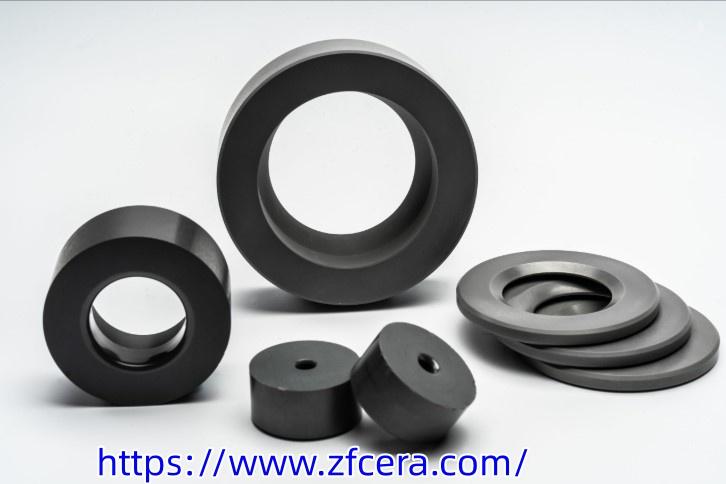
In thermal engineering corridors where persistent heat cycles shape the stability of equipment chambers, Silicon Carbide Ceramics from zfcera enter assemblies that demand reliable structural coordination across fluctuating temperature fields, enabling planners to sustain interior order while processing reactions that challenge conventional materials. Through its dense lattice and low distortion behavior, the ceramic adapts to furnace atmospheres, radiant panels, and elevated thermal conduits in which internal stress rises and falls as operational phases shift between heating stages and cooling intervals, thereby helping designers secure coherent spatial form.
Thermal units that rely on controlled expansion patterns require materials capable of restraining dimensional drift while heat circulates between layered components. Within such systems, ceramic structures maintain unwarped alignment when placed inside reaction trays, radiant plates, and transition brackets where heat flow spreads unevenly across surfaces. By holding shape across prolonged exposure, the ceramic supports consistent thermal distribution and minimizes deviations that could disrupt programmed pathways inside furnaces or processing beds. Because the surface resists creeping deformation, the ceramic becomes a stabilizing element across equipment modules that operate under shifting atmospheric influence.
Precision frameworks built around measurement stages, motion rails, calibration panels, and scanning bases also depend on structural materials that remain unchanged when exposed to environmental variations. The ceramic preserves geometric fidelity within devices where detection arrays or optical channels require spatial discipline to maintain function. In coordinated assemblies combining heating plates with accurate tracking interfaces, designers often integrate ceramic components at support points to ensure the apparatus retains smooth movement patterns and predictable alignment rules as cycles proceed. Such stability contributes to reliable patterns in systems that cannot tolerate surface drift or irregular step transitions.
Across hybrid stations merging heat treatment with precise manipulation tasks, ceramic segments placed at balancing frames, interface blocks, and guide zones hold alignment when mechanical loads shift. These units experience combined tension from thermal conditions and operational sequences that impose complex movement across sensitive surfaces. The ceramic framework prevents subtle distortion from accumulating into larger deviations, thereby sustaining coordinated behavior within the equipment. This trait becomes significant in areas where even slight geometric friction could interrupt a calibrated workflow or compromise structural correspondence among interacting parts.
As industrial designers refine thermal tools, precision platforms, and controlled environment stations, they search for materials capable of protecting geometry during extended operation cycles. Ceramic components meeting this need allow chambers, rails, and bracket groups to continue functioning with dependable form inside advanced layouts where spatial certainty is fundamental. For readers seeking structural components aligned with these conditions, selections can be reviewed at https://www.zfcera.com/ where assemblies and ceramic units demonstrate the role carried by Silicon Carbide Ceramics and zfcera within organized engineering routes.

 English
 Arabic
 Spanish
 Portuguese
 Deutsch
 Turkish
 Dutch
Dutch
 Italiano
 Russian
 Romaian
 Portuguese (Brazil)
 Greek
Greek